Autumn lingers in the space between life and decay. It is the season of transition, where the world exhales its final warm breath before winter’s grip settles in. Trees shed their vibrant leaves, covering the ground in reds, golds, and oranges that soon fade into browns and grays.
Each fallen leaf marks both an ending and a promise, a whisper of rebirth buried beneath the soil. The air holds a stillness laced with anticipation, inviting reflection, and a gentle reckoning with what we’re ready to release.
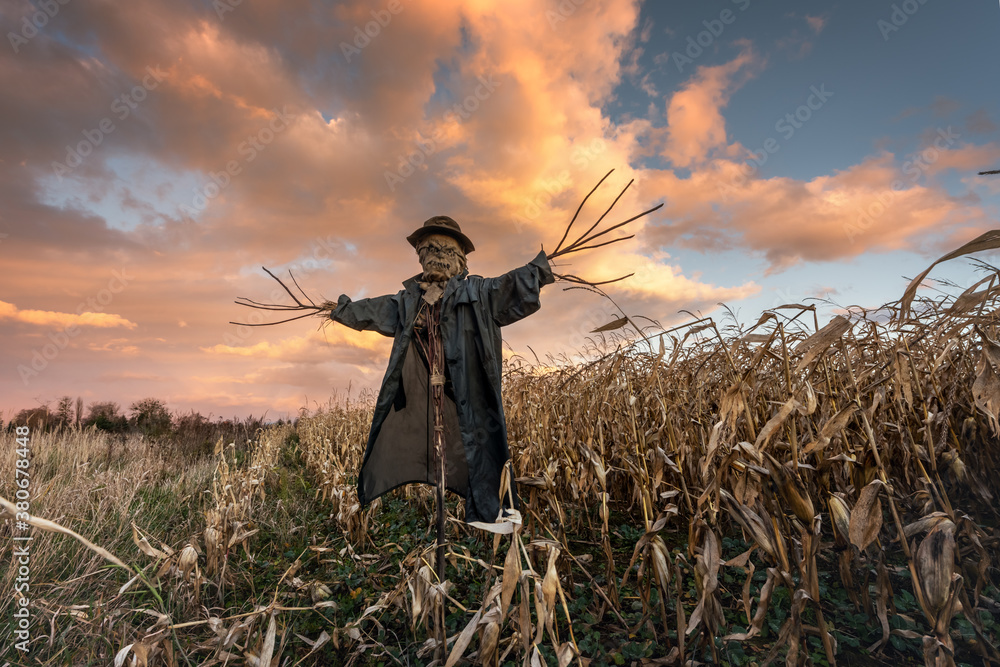
And it is there among the changing trees and soft decay that a lone figure stands. Not quite human, not entirely objective. A scarecrow.
At first glance, it’s nothing more than burlap and straw, an empty vessel meant to guard the land. But as the shadows stretch longer and the days grow colder, the Scarecrow seems to stir, taking on a presence beyond its stitched frame. It becomes something more: a mirror for our fears planted in the spaces we try not to see.
Silent and watchful, it waits.
Not to protect the field but to reflect what we’ve hidden.
In this season of letting go, the Scarecrow becomes sentinel and shadow
A witness to the in-between.
A keeper of the liminal.
Liminality refers to a state of transition in a space that defies fixed definitions. It’s where boundaries blur, and identity becomes fluid. Culturally, it marks rites of passage: thresholds between who we were and who we’re becoming.
In many traditional societies, these rites are sacred. During tribal initiations, young people are temporarily stripped of identity. They are neither children nor adults. They exist in a liminal realm undefined, unanchored.
In one example, a boy is blindfolded and left alone in the forest overnight, seated on a stump. He is told not to move, no matter what he hears. The darkness around him becomes a test of courage. Terror becomes his companion. If he endures the night, he returns and is recognized as a man by his tribe.
When dawn arrives, he removes the blindfold and sees his father nearby, watching silently the entire time.
This moment marks more than survival.
It is a transmission of strength.
A lesson in presence.
A rite that says: you are not alone, and you are no longer a child.
In contrast, many modern rites of passage in Western culture have lost this transformative edge. Celebrations like birthdays, graduations, and quinceañeras are joyful but often symbolic only in name. They lack the trials that demand introspection and change. The path to adulthood becomes blurred, and many reach maturity physically but remain emotionally untested.
In a culture shaped by comfort, coddling, and the obsession with “safe spaces,” we avoid discomfort at the cost of self-discovery. This avoidance breeds a quiet fear, irrational and often unnamed. We become adults afraid of shadows, darkness, and monsters we cannot name but feel lurking just out of sight.
The Scarecrow, as a cultural archetype, lives in this same space of liminality. It is both familiar and strange. Like mannequins or dolls, it has a human shape but no soul. It exists between life and lifelessness, evoking discomfort not because it threatens us but because it reflects something we can’t quite define.
At night, the Scarecrow’s silhouette sharpens. If it were to move just a twitch, just a tilt of the head it would unnerve us. Not because it’s monstrous but because it challenges what we believe to be real.
In this way, the Scarecrow is a projection of the shadow self.
Not evil, but unacknowledged.
Not monstrous, but misunderstood.
A container for the traits we repress. The thoughts we avoid. The fears we deny.
Monsters, too, are not always what they seem.
Frankenstein’s creature wasn’t born evil. He was made and then abandoned.
The Beast, in Beauty and the Beast, longs not to destroy but to be loved.
These figures blur the line between horror and humanity.
They are mirrors grotesque yet tender, forcing us to ask what makes us human.
In many cases, the monster is not cruel; the world has turned away from it.
Scarecrows, by tradition, stand watch over the harvest. A time associated with closure, transformation, and preparing for what’s next. Yet they also resemble us stitched together with intention but often misunderstood.
Folklore gives them a darker slant. In some legends, they are cursed wanderers or ghostly guardians, remnants of unresolved grief. They echo the boogeyman myth, a figure designed to instill fear and make us behave. But fear, like the harvest, is cyclical. It returns each season, demanding we face what we once buried.
In The Wizard of Oz, the Scarecrow seeks a brain, though he demonstrates intelligence throughout the journey. This reveals a more profound truth: we often search for what we already possess, needing only to recognize it within ourselves.
And then there’s the crow traditionally a symbol of death but also of wisdom, adaptability, and transformation. Its presence beside the Scarecrow completes the duality: the shadow and the guide, the fear and the insight, the thing we deny and the truth we can no longer avoid.
Liminality whether found in a rite of passage, a stitched figure in a field, or the shape of a forgotten monster invites us to stand at the edge of what we know and peer into the unknown.
It asks us to pause.
To confront what’s hidden.
To cross the threshold not with fear but with awareness.
In this in-between space, we do not lose ourselves.
We find who we were meant to become.

 Allevi8ed Writing
Leave a comment